
How to Style Patterned Scarves with Confidence
A patterned scarf can transform the familiar: a well-loved navy coat, a simple white shirt, the knitwear you reach for every autumn. Learning how to style patterned scarves is less about following strict rules and more about letting a wearable work of art bring colour, character and a little story to your day.
The most useful approach is to begin with what the scarf already offers. Its palette may recall a British woodland, a favourite coastal escape, painterly florals or a treasured heritage motif. Rather than treating pattern as something to tame, allow it to lead. A thoughtfully designed scarf deserves to be seen, and it can be surprisingly easy to wear.
How to style patterned scarves by starting with colour
The simplest way to make a patterned scarf feel intentional is to choose one colour from its design and echo it in your outfit. This need not be an exact match. A scarf with soft moss green, berry red and cream may sit beautifully with an olive jumper, a burgundy bag or warm neutral tailoring. The connection can be subtle, but it gives the whole look a considered finish.
For everyday dressing, pair a richly patterned silk scarf with a quiet foundation: denim, a crisp cotton shirt, black trousers, a camel coat or a simple knitted dress. These pieces give the artwork room to speak. This is not a rule against colour, however. If you enjoy a more expressive look, choose a second shade from the scarf and wear it as a cardigan, trouser or skirt. Keeping the colours related makes pattern mixing feel polished rather than accidental.
Neutrals are especially generous companions for statement accessories. Navy gives bright blues, creams and reds a classic setting; charcoal adds depth to jewel tones; ivory brings out the delicacy of watercolour-inspired prints. A scarf can also soften an all-black outfit, lending light and personality close to the face.
Consider scale, fabric and proportion
A scarf’s size and fabric affect how it sits, how much of the print is visible and where it feels most comfortable. There is no single best way to wear one. It depends on the occasion, the neckline and whether you want the scarf to be the focal point or a finishing touch.
A square silk scarf has a lovely sense of structure. Folded into a triangle and loosely tied at the neck, it frames the face with timeless elegance. Fold it into a long band for a neater look with an open-collared shirt or crew-neck knit. Let a little of the pointed triangle show at the front, rather than pulling it tightly around the neck, so the design and the natural drape of the silk remain visible.
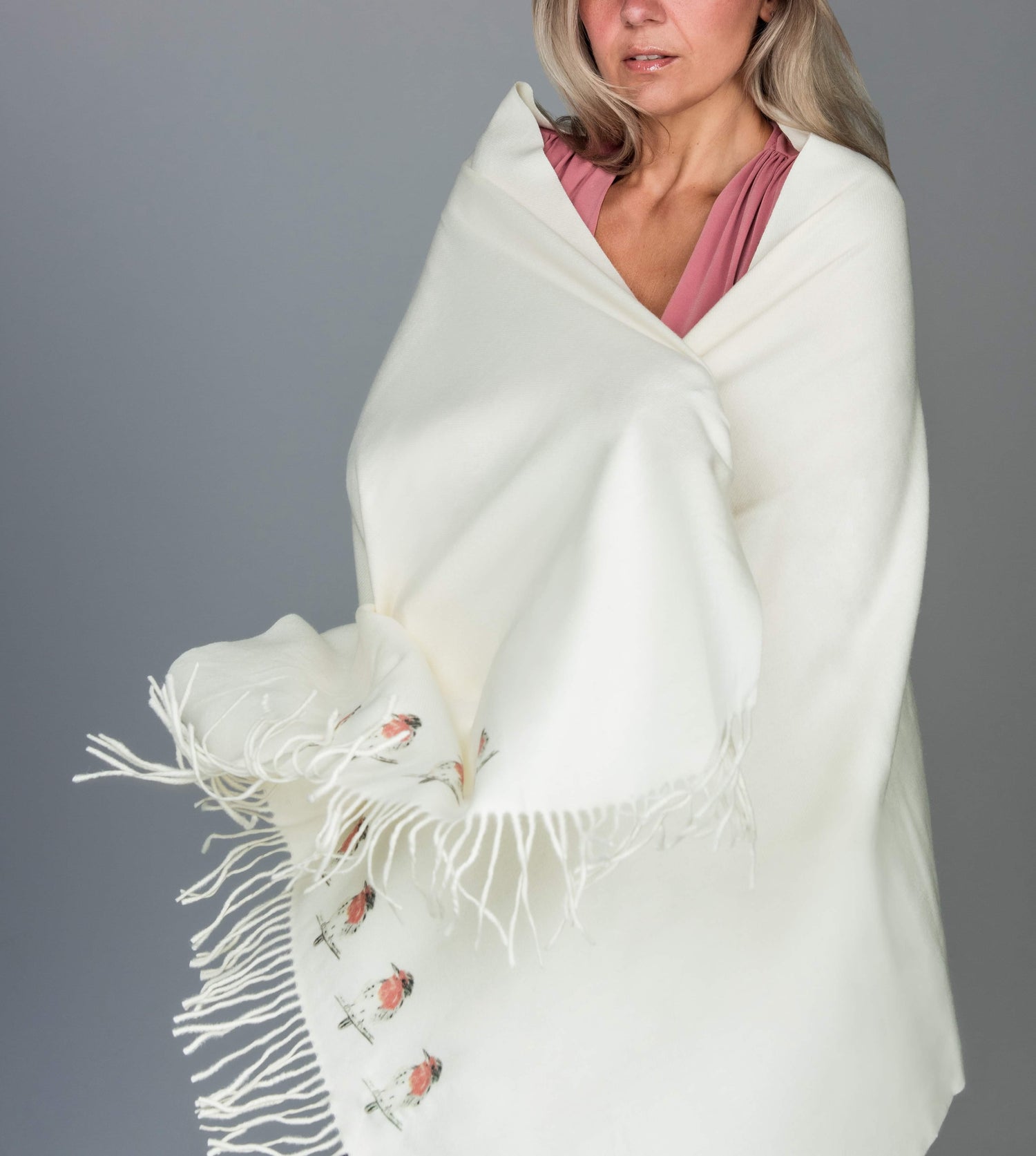
A larger scarf offers more possibilities. On cooler days, wear it loosely over a coat with the ends falling straight, or wrap it once and leave the pattern on display. A generous scarf can also be draped over the shoulders for dinner, a gallery visit or an occasion when you would like an extra layer without the formality of a jacket.
Silky-soft recycled fabrics and cashmere-feel scarves are often particularly useful for travelling. They are light enough to pack easily, yet can add warmth on a train, in an airport lounge or during an evening walk by the sea. A neck buff or bandana gives a more relaxed, compact option, especially with casual layers, a waxed jacket or a simple Breton top.
Three easy ways to tie a patterned scarf
The relaxed triangle
Fold a square scarf diagonally, place the triangle at the front of your neck and bring the ends around to tie loosely underneath or behind. This shape works beautifully over a plain knit and allows a generous sweep of pattern to show. Adjust the point higher or lower depending on your neckline.
The elegant necktie
Fold the scarf into a narrow band and tie it once or twice at the side of the neck. This is a quietly refined choice with a white shirt, a sleeveless dress or a blazer. Let the ends fall softly rather than making an overly precise bow. A little movement keeps the effect effortless.
The shoulder drape
For a larger scarf, simply place the centre at the back of your neck and let both ends fall over the front of an outfit. It is wonderfully unfussy and particularly effective when the print has a border or scenic detail worth showing. A brooch can hold one side in place if you prefer a more sculpted silhouette.
Wear pattern beyond the neck
A patterned scarf need not always be tied at the neck. Worn in the hair, it can lend a simple ponytail or low bun a sense of occasion. Fold it into a slim band, wrap it around the base and allow the ends to trail. For a softer effect, use it as a headband with loose hair and understated jewellery.
Tying a small scarf to the handle of a leather handbag adds colour without changing the proportions of your outfit. It works especially well when your clothing is minimal but you still want a recognisable signature. Choose a loose knot and allow the printed ends to flutter, rather than wrapping the whole handle.
A scarf can also become an elegant belt. Thread a narrow fold through belt loops on jeans or tailored trousers, then secure it with a simple knot at one side. The effect is most flattering when the rest of the outfit is clean-lined. With a shirt dress, position the scarf slightly above the natural waist for gentle definition.
For holiday dressing, a larger piece may be worn as a light shoulder cover-up, a headscarf on a breezy day or tied around the waist over swimwear. The key is to choose a fabric appropriate for the setting. Fine silk is exquisite for lunches and evenings, while a recycled, easy-care scarf may suit sun-filled days and everyday adventures more comfortably.
Mix patterns with a light touch
Pattern mixing can be joyful, but it benefits from one point of calm. If your scarf is filled with intricate illustrations, painterly brushstrokes or tartan-inspired checks, pair it with one smaller, quieter pattern such as a fine stripe or subtle pinstripe. Keep the colours connected and vary the scale. A large botanical print beside a delicate striped shirt is easier on the eye than two bold designs competing at the same size.
If you are hesitant, begin with texture rather than another print. A patterned scarf against cable knit, linen, denim or velvet has depth without visual clutter. Heritage-inspired designs also sit naturally beside tactile British classics: a wool coat, leather boots, a tweed blazer or a simple cashmere jumper.
Jewellery deserves the same thoughtful balance. When the scarf is the artwork, choose small hoops, pearl studs or a fine gold chain. If you are wearing a scarf as a belt or bag detail, a more expressive earring can work beautifully because the accessories are not competing in the same area.
Let the scarf tell part of your story
The most enduring styling choice is the one that feels like you. Perhaps a landscape design recalls a place you love, a wildlife print reflects your appreciation for nature, or a heritage pattern makes a meaningful gift feel even more personal. These details turn an accessory into something more lasting than a seasonal flourish.
At Art on Scarves, this idea is at the heart of StoryWear: pieces inspired by art, place and memory, created to be worn often and treasured for years. A consciously made scarf can bring beauty to an existing wardrobe rather than asking you to replace it. That is the quiet pleasure of styling it well.
Try one new fold before your next coffee, lunch or evening out. The right scarf does not demand an entirely new outfit. It simply gives your own one a more memorable story to tell.