
Are Recycled Fabrics Comfortable to Wear?
A scarf is worn close to the skin, often for hours at a time. It needs to feel beautiful as well as look beautiful. So, are recycled fabrics comfortable? When they are thoughtfully made, absolutely. Recycled textiles can be silky-soft, light, warm and wonderfully easy to wear - but the answer depends less on the word ‘recycled’ and more on the fibre, the weave and the care taken at every stage of creation.
For anyone choosing accessories with both style and conscience in mind, comfort is not a compromise to make for the planet. It is part of what makes a piece worth keeping, styling and treasuring for years.
Are recycled fabrics comfortable? It starts with the fibre
Many recycled scarves and accessories are made with recycled polyester, commonly created by transforming post-consumer plastic bottles into fine yarn. The bottles are cleaned, processed into small flakes, melted and spun into fibres that can then be woven or knitted into fabric. By the time this yarn becomes a finished scarf, it bears little resemblance to its previous life.
A well-made recycled polyester fabric can have a smooth, fluid handle and a gentle sheen. It can be printed in rich, lasting colour and made light enough to sit softly at the neck, in the hair or tied to a handbag. This makes it especially suited to expressive accessories, where detailed artwork, movement and versatility matter.
The important distinction is quality. Recycled polyester is not automatically scratchy, just as virgin polyester is not automatically soft. The thickness of the yarn, the density of the weave, the finish applied to the cloth and the skill of the maker all shape the final feel. A coarse, tightly woven fabric may feel less supple, while a finely woven one can feel remarkably smooth against the skin.
What comfort really means in a scarf
Comfort is personal. One person may love the featherlight swish of a silky recycled fabric for spring and summer; another may be looking for a warmer, brushed cashmere-feel finish for crisp country walks and winter journeys.
With scarves, comfort usually comes down to four quiet qualities: softness, weight, breathability and drape. Softness is the immediate sensation against the neck. Weight affects whether a scarf feels barely there or reassuringly substantial. Breathability influences how it feels through the day, particularly indoors or when travelling. Drape is the way fabric falls, folds and ties - the quality that turns an accessory into an effortless part of an outfit.
Recycled polyester performs particularly well in lightness and drape when it is made into fine yarns. It is also durable, crease-resistant and quick-drying, qualities that are useful for a scarf slipped into hand luggage, worn in changeable weather or styled in several ways over a busy week. A recycled neck buff can be equally practical: easy to pack, comfortable for outdoor days and ready to provide an extra layer when the temperature dips.
Natural fibres have their own strengths. Silk offers its distinctive cool, smooth touch and luminous movement. Wool and cashmere bring warmth and a softer, loftier feel. Recycled fabrics do not replace every experience offered by natural fibres. They offer another considered choice, particularly where durability, vivid printed design and the opportunity to give existing materials a new purpose are valued.
Why older recycled fabrics earned an unfair reputation
Some of the uncertainty around recycled fabric comfort comes from earlier products. In the past, recycled synthetic textiles were sometimes associated with stiff fleeces, rough utility fabrics or garments designed primarily for performance rather than softness. The technology, and fashion’s expectations, have moved on.
Modern recycling and spinning processes can produce much finer fibres. Textile makers can control yarn texture, weave construction and finishing techniques with far greater precision, creating fabrics that feel refined rather than merely functional. The most successful recycled accessories do not ask you to admire them only because they are responsible. They invite you to wear them because they are beautiful.
That said, there is no virtue in pretending every recycled fabric feels identical. A recycled canvas tote, a technical running top and a flowing printed scarf are made for entirely different purposes. Judge the piece in front of you, not the category alone.
The fabric finish matters as much as the material
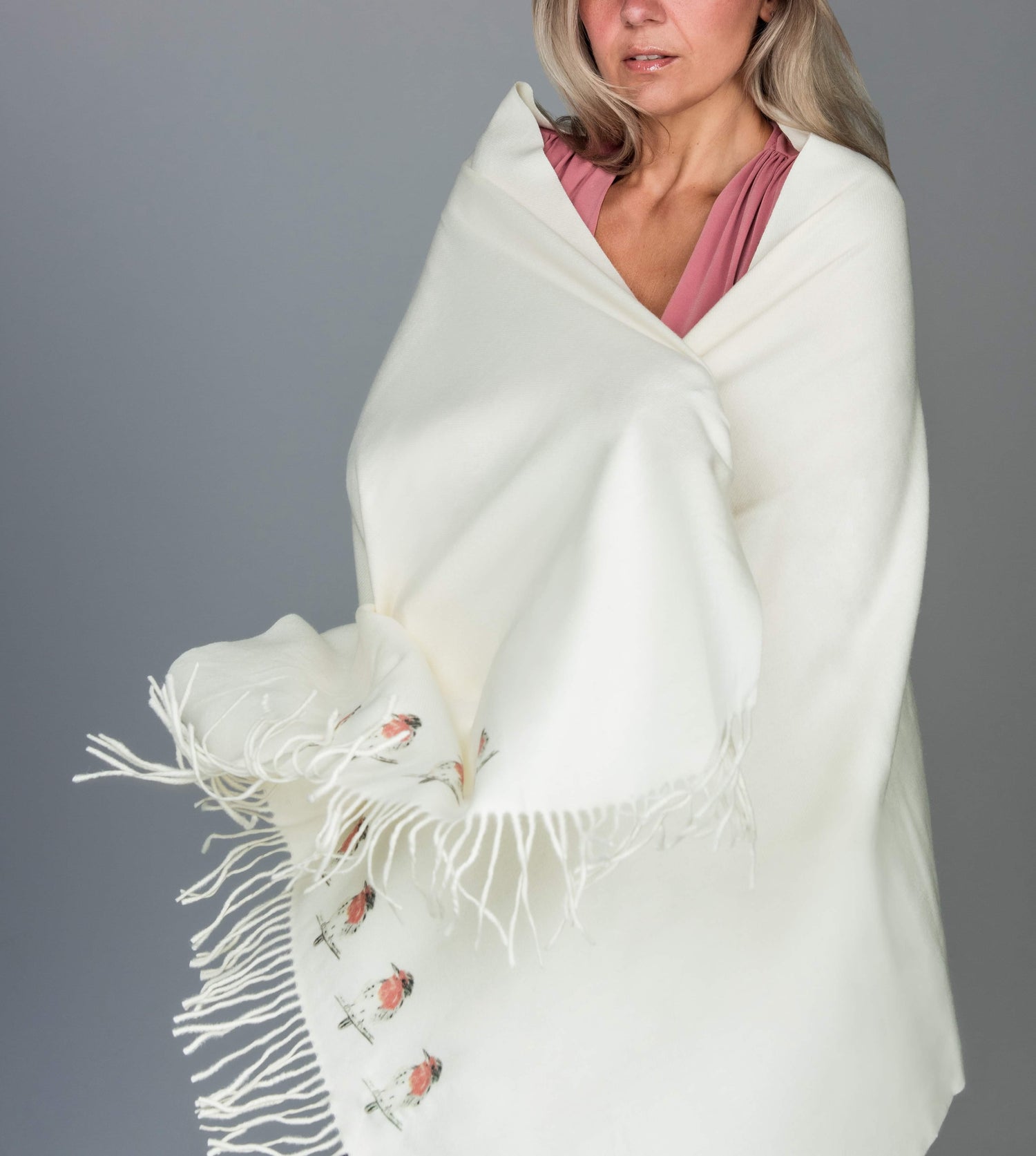
When considering a recycled scarf, look beyond the headline material. Product descriptions can offer useful clues about how it may feel and wear. Words such as fine woven, silky-soft, lightweight, brushed or cashmere-feel indicate the intended handle of the cloth. A description of a substantial weave may suit those who prefer more structure and warmth.
Print quality is also part of the experience. On a finely made recycled polyester scarf, artwork can appear clear, saturated and full of detail. This allows landscapes, wildlife, heritage motifs and painterly marks to retain their character in the finished piece. A scarf then becomes more than an accessory: it is a wearable work of art with a story held in every fold.
The finishing of edges deserves attention too. A neatly finished edge helps a scarf sit well and keeps it feeling polished over repeated wear. These details may seem small, but they are what make an everyday piece feel considered each time you reach for it.
Comfort across seasons and occasions
The best accessory fabrics earn their place by adapting to real life. A lightweight recycled scarf can soften a tailored jacket for work, bring colour to a simple knit, or offer a little cover on a breezy summer evening. It can be tied at the neck, worn loosely over the shoulders, folded as a headscarf or used to lend personality to a favourite bag.
For travelling, recycled polyester’s practical qualities can be especially welcome. It is less prone to deep creasing than many delicate fabrics and dries quickly if caught in a shower or refreshed by hand while away. It is not necessarily the coolest choice in intense heat compared with fine silk, linen or cotton, but a light, open weave can remain comfortable in milder summer conditions.
In colder months, a silkier recycled scarf works beautifully as a decorative layer rather than a substitute for a thick wool wrap. Pair it with knitwear or tuck it beneath a coat collar for colour close to the face. For more warmth, choose a cashmere-feel recycled design or layer a lighter printed scarf with a warmer outer piece. Style should work with the season, not against it.
How to choose a recycled fabric you will love wearing
If you are sensitive to texture, begin with your own preferences. Do you enjoy a smooth finish, or do you favour the cosy softness of brushed fabrics? Do you like a scarf to hold a sculptural knot, or would you rather it float and drape? These questions will guide you more reliably than a fibre label alone.
Consider the scale of the piece as well. A generous scarf gives more room for wrapping, layering and imaginative styling, while a smaller square can feel wonderfully unobtrusive at the neck or in the hair. A neck buff offers a close, practical fit for walking, cycling or travelling. Each can be comfortable, provided it suits the way you actually dress.
It is also worth choosing from makers who are clear about material and purpose. Responsible fashion should feel honest, not vague. Knowing that plastic bottles have been transformed into a refined accessory adds meaning, but it should sit alongside a genuine description of softness, finish and intended use.
At Art on Scarves, this belief sits at the heart of StoryWear: giving materials a thoughtful second life while creating distinctive designs that people want to reach for again and again. The aim is not to make sustainability look worthy. It is to make it feel elegant, expressive and entirely at home in a well-loved wardrobe.
Caring for softness over time
Comfort lasts longer when a scarf is cared for kindly. Check the individual care label first, as instructions vary by fabric and finish. In general, a gentle cool wash with mild detergent can help preserve recycled polyester’s smooth feel and printed detail. Avoid harsh bleach, high heat and rough surfaces that may catch delicate fibres.
Air-drying is usually the gentlest route. If a scarf needs smoothing, use a cool iron with care, ideally on the reverse side or with a pressing cloth between the iron and the fabric. Store it clean and dry, folded or lightly rolled, away from prolonged direct sunlight.
The most sustainable piece is not simply the one made from recycled material. It is the one that is worn often, cared for well and still feels like you years from now. Choose a texture that makes you want to touch it, a design that says something personal, and a scarf that brings a little beauty to the ordinary journey out of the door.